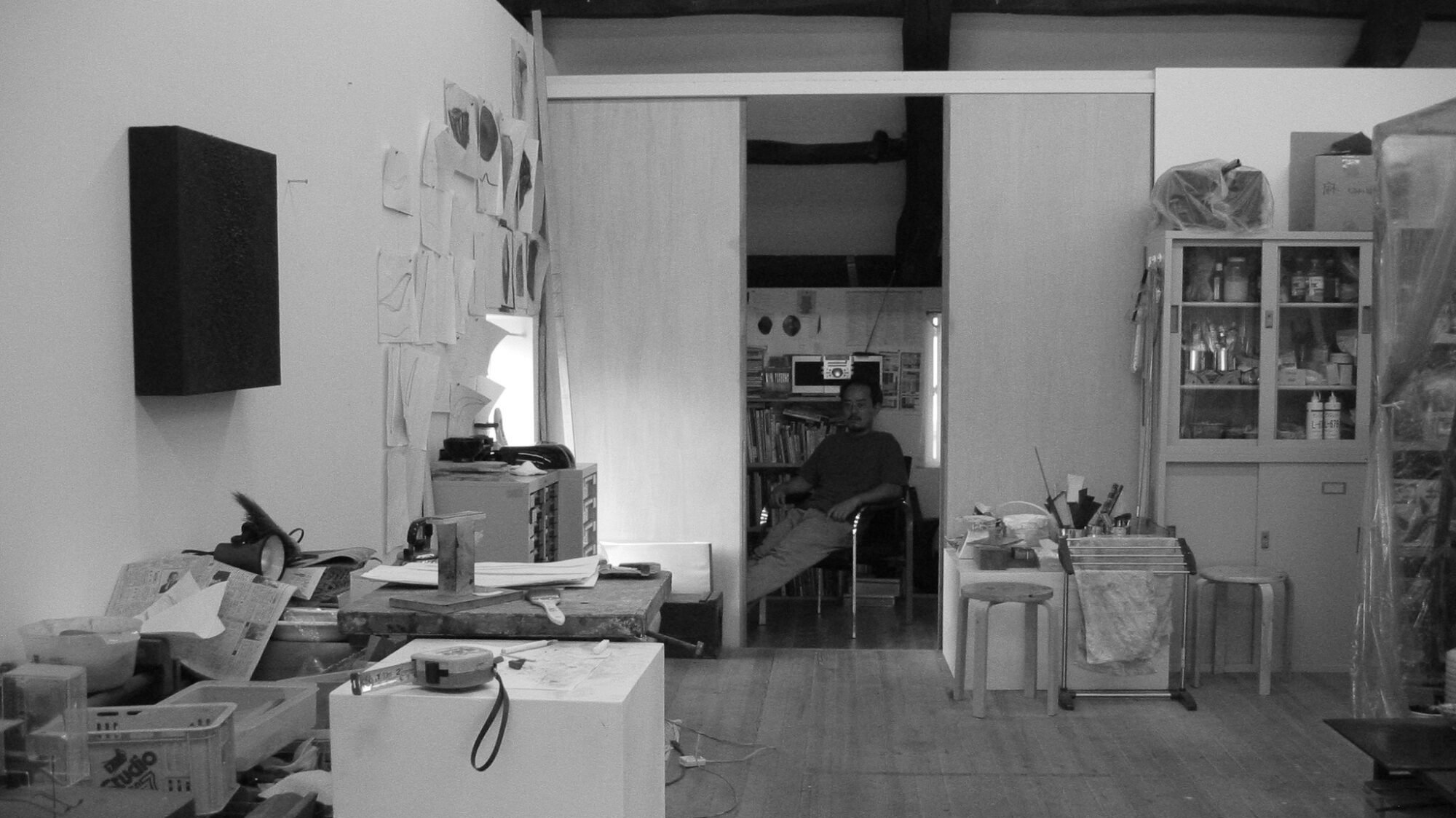
Profile
田中信行(1959–)は、金沢を拠点に活動する漆作家・現代美術作家。漆と麻布を主な素材とし、伝統的な乾漆技法を、独自の立体表現へと展開している。1980年代末より、漆を単に物体の表面を覆う素材としてではなく、それ自体が自律した存在として空間に立ち現れる可能性を探究している。塗りと研ぎを繰り返す制作過程を通して、身体と物質、空間の関係を問いながら、言語以前の原初的な感覚に働きかける表現を追求している。作品は、メトロポリタン美術館(ニューヨーク)、ヴィクトリア&アルバート博物館(ロンドン)、ヒューストン美術館、国立工芸館(金沢)、金沢21世紀美術館、森美術館(東京)、豊田市美術館、フィラデルフィア美術館、ミネアポリス美術館など、国内外の美術館に収蔵されている。
Artist Statement
漆が私の本能を刺激し、意識を原初へと導き、制作へと駆り立てる。
黒漆からは流れるような立ち上がった立体を、朱漆からは生の痕跡を塗りこめたような官能的な表現を。
塗りと研ぎを繰り返しながら生まれる漆の表情は、人為を超えて私自身を、そして見る者を無意識へと誘う。
立ち上がった漆面は、鑑賞者を漆黒の闇に吸い込むかのように、日常と非日常の境界として空間に存在する。
Profile
Nobuyuki Tanaka (b. 1959) is a contemporary artist working primarily with urushi (Japanese lacquer), based in Kanazawa, Japan. Using urushi and hemp cloth as his principal materials, he develops the traditional kanshitsu (dry lacquer) technique into a distinctive form of sculptural expression. Since the late 1980s, Tanaka has explored the potential of urushi to emerge as an autonomous presence in space, beyond its conventional role as a coating for objects. Through repeated cycles of applying and polishing lacquer, he investigates the relationships between body, matter, and space, seeking to engage with primal sensations that precede language.His works are held in public collections in Japan and internationally, including The Metropolitan Museum of Art; the Victoria and Albert Museum; the Museum of Fine Arts, Houston; the National Crafts Museum, Japan; the 21st Century Museum of Contemporary Art, Kanazawa; the Mori Art Museum; the Toyota Municipal Museum of Art; the Philadelphia Museum of Art; and the Minneapolis Institute of Art.
Artist Statement
Lacquer serves as a medium that stirs my instincts, guiding my consciousness back to a primordial state and compelling me to create.
From black lacquer emerge flowing, ascending forms; from vermilion lacquer, I evoke sensual expressions, as if embedding traces of life itself.
The expression of lacquer, born through repeated cycles of layering and polishing, transcends intention—drawing both myself and the viewer into the unconscious.
The rising lacquered surfaces exist within space as boundaries between the everyday and the extraordinary, pulling the viewer into a pitch-black void.